


Architectural Model Making & 3D Visualization Trends
Architectural model making and 3D visualization are no longer separate presentation tools. For real estate developers, architects, government entities, and project stakeholders, they now work together to communicate projects before they are built.
A physical architectural scale model gives the project presence, scale, and clarity. 3D visualization adds realism, atmosphere, motion, and digital storytelling. When combined with interactive sales tools, VR, AR, and multimedia presentations, they help transform unbuilt developments into experiences that buyers, investors, and decision-makers can understand faster.
This is why the market is growing. The global 3D rendering and visualization software market was valued at USD 3.87 billion in 2025 and is projected to reach USD 19.80 billion by 2034, growing at a CAGR of 19.9 percent. Grand View Research also reports strong growth in the 3D rendering market, projecting growth from USD 5.7 billion in 2026 to USD 19.8 billion by 2033.
The future of real estate presentation is not physical or digital. It is the strategic combination of both.
The strongest project presentations do not choose between models, CGI, animation, and interactivity. They connect them into one clear experience before the project exists.
Why Architectural Model Making and 3D Visualization Are Growing
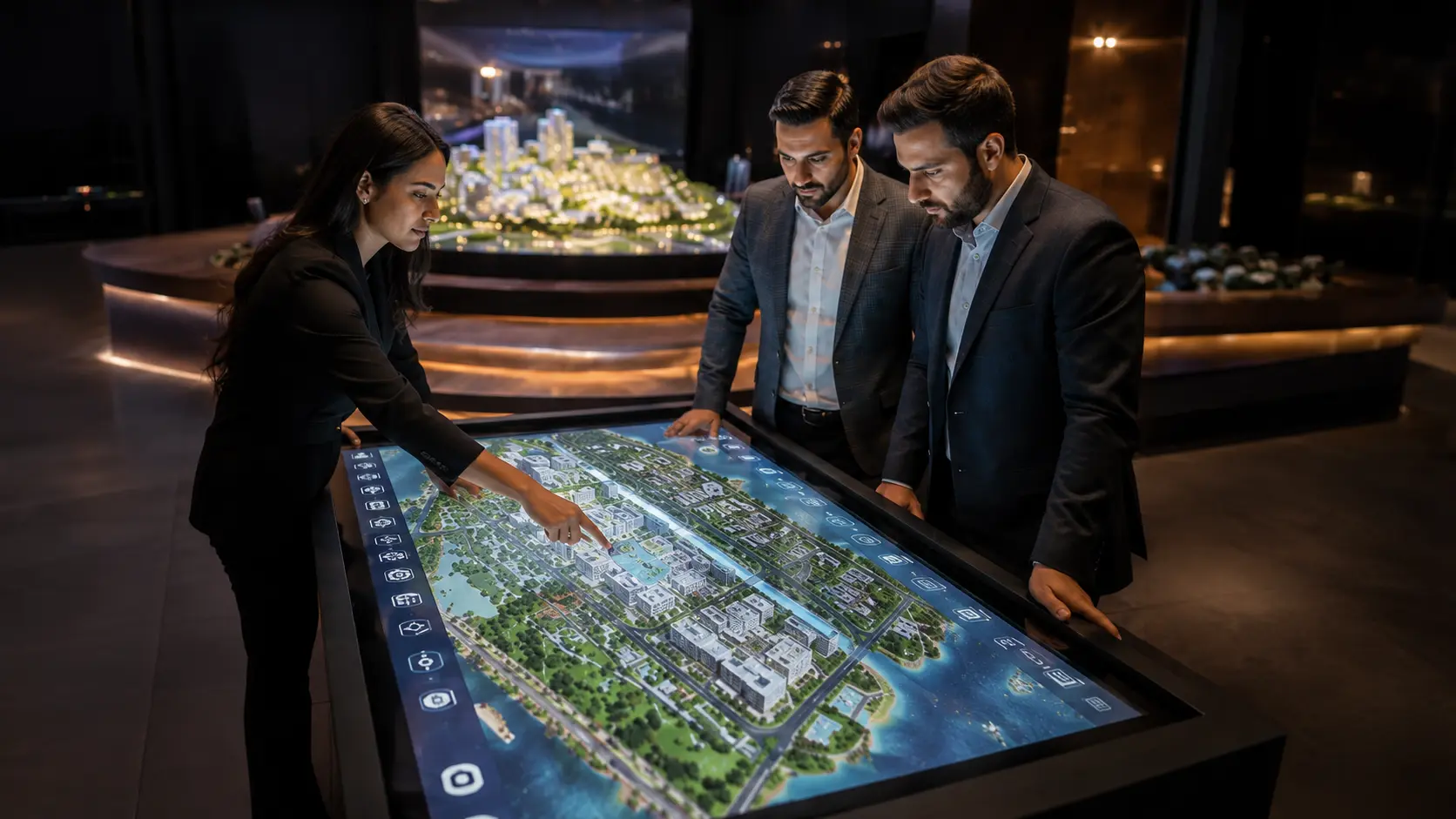
Real estate projects are becoming larger, more complex, and more competitive. Developers need to communicate design value before construction begins. Static drawings and standard brochures are no longer enough for premium developments.
Architectural model making and 3D visualization help answer critical questions:
- What will the project look like?
- How does it fit into the site?
- What is the scale of the development?
- How do buyers move through the project?
- What are the views, amenities, access points, and key features?
- How can investors understand the project faster?
- How can the sales team explain the vision clearly?
This is where physical models, CGI renders, animation, and interactive presentation tools become commercially important.
For developers, these tools are not decoration. They support sales, marketing, investor confidence, authority approvals, exhibition impact, and buyer understanding.
1. Physical Scale Models Are Still Highly Relevant
A common mistake is assuming that digital visualization has replaced physical scale models. It has not.
Physical architectural models still play a powerful role because they allow people to understand scale, proportion, masterplan layout, building relationships, landscaping, and development context in one view.
For sales centers, exhibitions, boardrooms, and public presentations, a physical model creates presence. People can walk around it, point to specific zones, compare plots, understand access roads, and see the full project from multiple angles.
This is especially important for:
- Masterplan models
- High-rise tower models
- Villa and resort models
- Mixed-use development models
- Shopping mall models
- Industrial and infrastructure models
- Government and public sector presentations
Digital tools can create emotion and realism. Physical models create clarity and spatial understanding.
The strongest presentations use both.
2. 3D Visualization Is Becoming a Sales and Marketing Tool
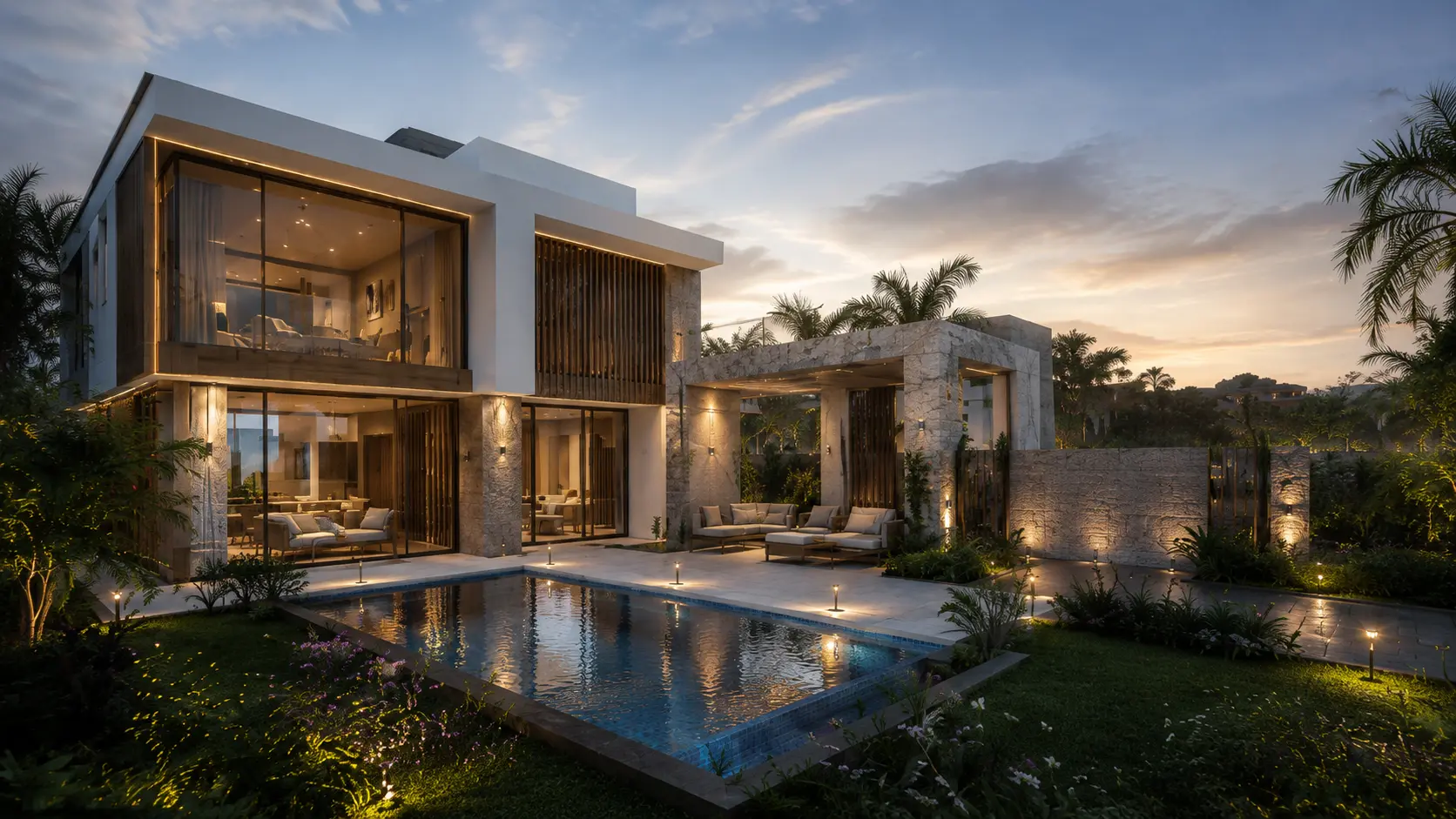
3D visualization is no longer used only at the design stage. It is now a major part of real estate sales and marketing.
CGI renders, 3D animations, walkthroughs, flythroughs, and cinematic project videos help developers show the lifestyle, atmosphere, materials, lighting, and experience of a project before construction is complete.
For real estate developers, 3D visualization supports:
- Pre-launch marketing
- Investor presentations
- Digital campaigns
- Website project pages
- Sales brochures
- Social media campaigns
- Exhibition screens
- Project teaser videos
- Sales center presentations
A physical model shows the full development. 3D visualization shows how the future will feel.
That emotional layer matters. Buyers and investors do not only want to understand the plan. They want to imagine the finished project.
3. BIM and Data-Led Design Are Influencing Model Making
Building Information Modeling, or BIM, is changing how design and production teams coordinate project information. The global BIM market was estimated at USD 8.53 billion in 2024 and is projected to reach USD 23.74 billion by 2033, driven by cloud-based BIM adoption, AI integration, sustainability needs, and wider use beyond design into operations.
For architectural model making and visualization, this matters because better design data can support more accurate production.
BIM and digital design files can help model-making teams understand:
- Building massing
- Façade systems
- Levels and heights
- Landscape zones
- Structural grids
- Road layouts
- Material intent
- Design revisions
However, BIM files alone do not create a premium physical model. They still need interpretation, simplification, detailing, material decisions, craftsmanship, and presentation strategy.
This is where experienced model makers matter. The goal is not to copy every digital detail blindly. The goal is to translate the project into a clear, beautiful, and buildable presentation model.
4. VR and AR Are Creating More Immersive Project Experiences
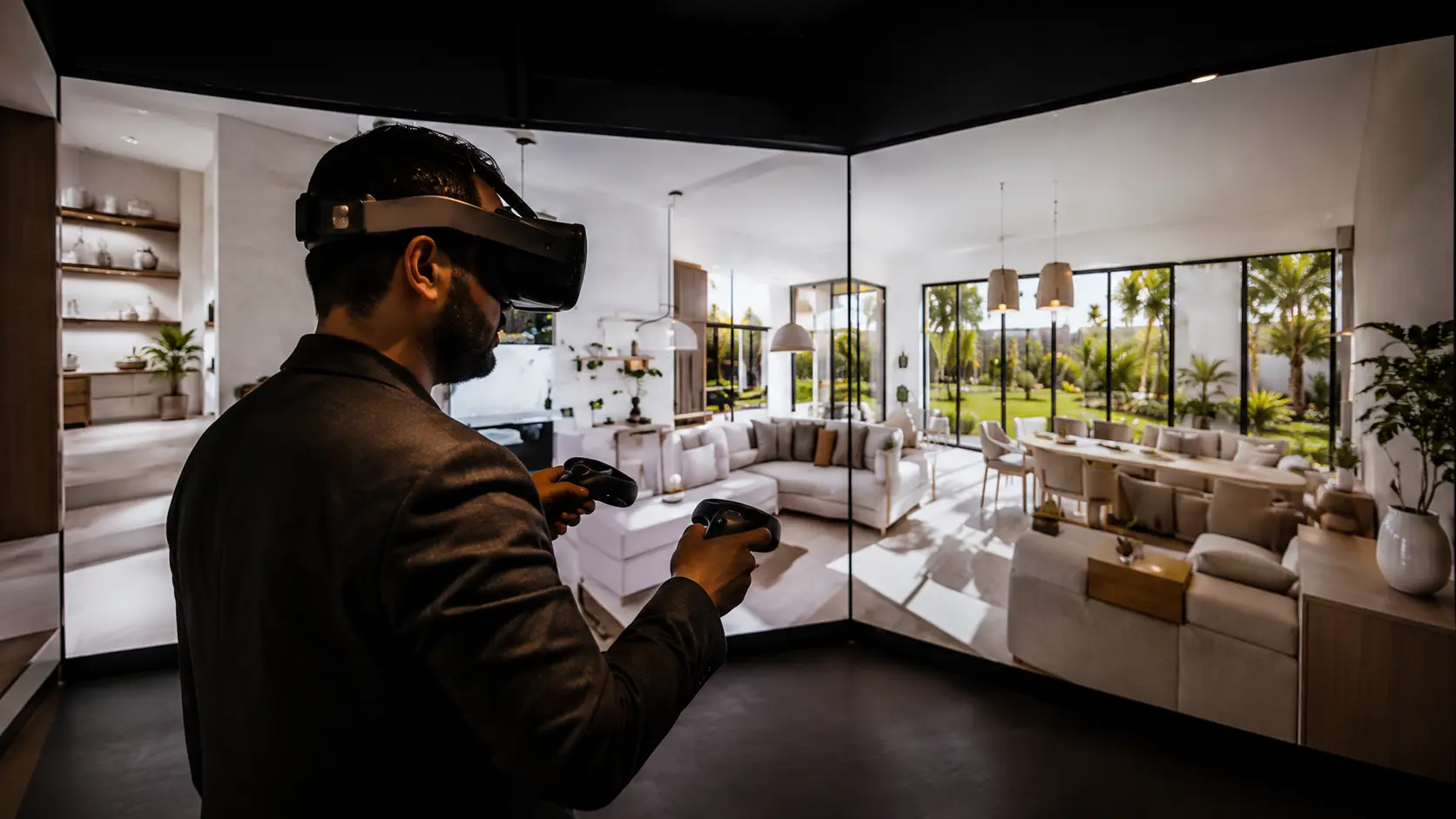
Virtual reality and augmented reality are becoming more useful for real estate presentation, especially when developers want buyers and stakeholders to experience spaces before they are built.
VR can allow users to explore apartments, villas, amenities, lobbies, landscapes, or public spaces in an immersive digital environment.
AR can overlay digital content onto physical models, brochures, tablets, or real-world spaces.
For developers, VR and AR can support:
- Project launches
- Sales galleries
- Exhibitions
- Investor meetings
- Apartment selection
- Amenity previews
- Interactive masterplan exploration
- Buyer engagement
The mistake is using VR or AR only because it feels modern. That is weak thinking.
VR and AR should solve a presentation problem. They should help the buyer understand something better, faster, or more emotionally than a static image can.
5. Interactive Sales Solutions Are Replacing Static Presentations
Real estate buyers now expect better presentation experiences. Static brochures and flat screens are not enough for many premium projects.
- Interactive sales solutions can include:
- Touchscreen masterplans
- Sales and leasing apps
- Unit selection tools
- Interactive floor plans
- 360 virtual tours
- Project comparison tools
- Digital brochures
- Availability dashboards
- Integrated model lighting controls
These tools help sales teams explain projects more clearly and professionally.
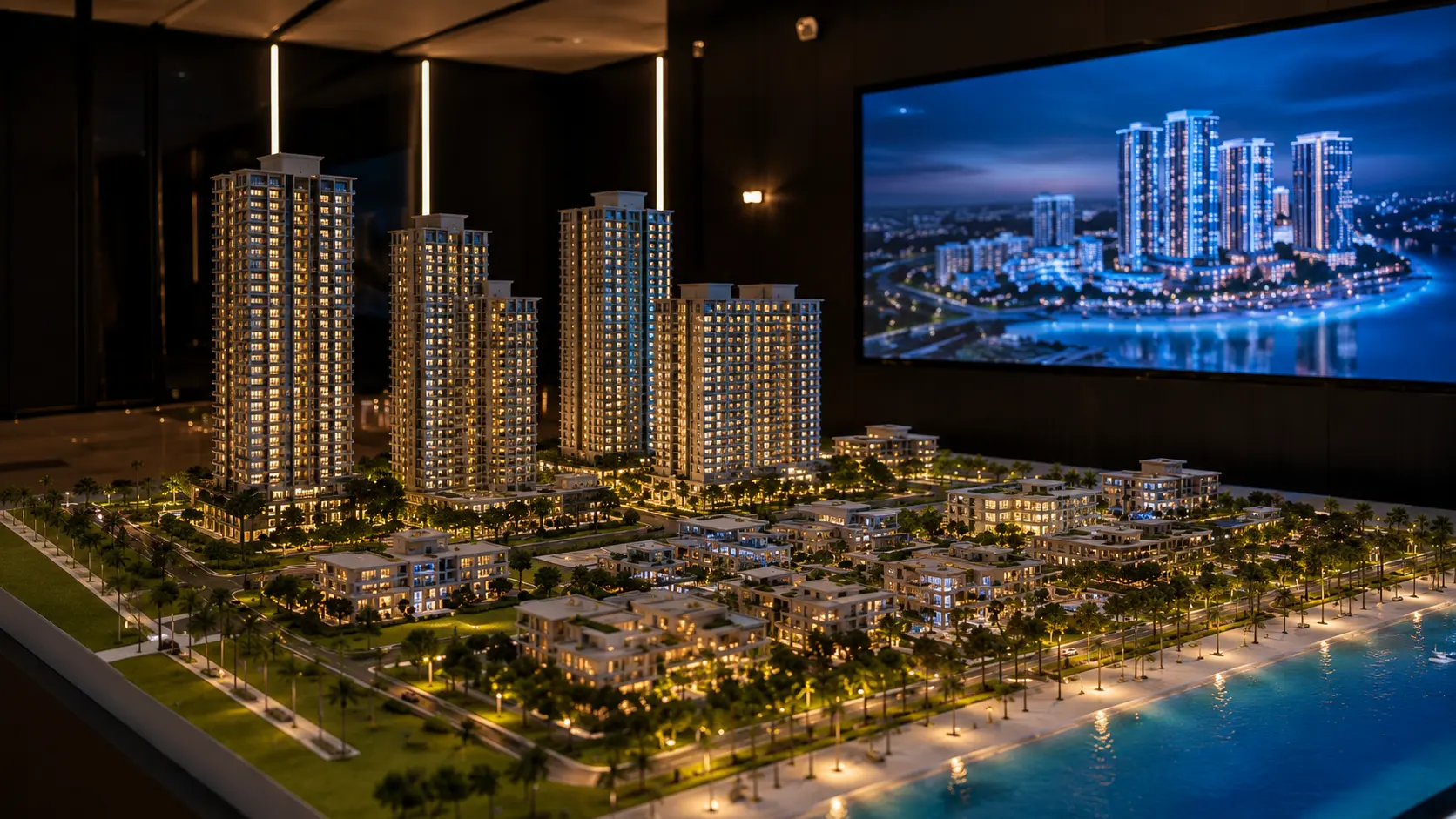
For large developments, interactive systems can connect the physical model with digital content. For example, a buyer may select a tower, plot, villa, or apartment on a screen while the model highlights that location using lighting.
This kind of integration turns a model into a sales experience, not just a display object.
6. AI Is Speeding Up Visualization, But Not Replacing Expertise
AI is changing parts of the visualization workflow. It can help with concept exploration, moodboards, early image generation, scene ideas, visual references, and faster iteration.
But AI is not a replacement for professional architectural visualization or physical model making.
Real estate presentation still requires:
- Accurate project interpretation
- Correct scale
- Design understanding
- Brand alignment
- Material logic
- Lighting control
- Composition
- Technical production
- Sales strategy
- Quality control
AI can assist the process. It cannot replace the judgment needed to present a serious development accurately.
Google’s own guidance for AI search also makes the same broader point for content: unique, expert-led, useful content matters more than generic AI-produced material. The same principle applies to visualization. Generic output is not enough for premium projects.
7. Cloud Rendering and Remote Collaboration Are Improving Speed
Cloud-based rendering and digital collaboration tools are helping teams work faster across locations. This is especially useful when developers, consultants, architects, and marketing teams are based in different cities or countries.
Cloud workflows can support:
- Faster rendering
- Remote design reviews
- Shared project files
- Version control
- Multi-team coordination
- Large visualization workflows
- Presentation updates before launches
For projects in the UAE, GCC, and wider region, this matters because real estate developments often involve multiple stakeholders across different markets.
Speed is important, but speed alone is not enough. Fast visuals that are inaccurate or poorly directed can damage the project presentation.
The right process combines technology with clear creative direction.

8. The Future Is Hybrid: Physical Models + Digital Experiences
The strongest trend is not physical model making alone. It is not 3D visualization alone either.
The future is hybrid.
A developer may need:
- A masterplan model for the sales center
- CGI renders for marketing campaigns
- 3D animation for launch videos
- VR for immersive buyer experience
- AR for interactive storytelling
- Touchscreen tools for unit selection
- Multimedia presentation for exhibitions
- Digital content for social media and websites
When these tools work together, the project becomes easier to understand and more powerful to present.
This is where BIDllc’s work fits strongly. Developers do not only need a model maker or a rendering supplier. They need a presentation partner who can connect physical production, digital visualization, and interactive sales experience into one coherent system.
Bring Your Project Vision to Life with BIDllc
BIDllc’s Role in Architectural Model Making and 3D Visualization
BIDllc supports real estate developers, architects, government entities, and project stakeholders with premium architectural scale models, 3D visualization, and interactive presentation solutions.
Our expertise includes:
- Architectural scale models
- Masterplan models
- High-rise tower models
- Villa and resort models
- Interior floor plan models
- Industrial and engineering models
- CGI renders
- 3D animation
- 360 virtual reality
- Augmented reality
- Sales and leasing apps
- Multimedia design and production
- Sales center and exhibition presentation solutions
The objective is simple: help clients present future developments clearly, professionally, and memorably before they are built.
Final Thoughts
Architectural model making and 3D visualization are growing because real estate presentation has become more demanding.
Developers need to show more than buildings. They need to show scale, context, lifestyle, movement, value, and future experience.
Physical scale models help people understand the project. 3D visualization helps people imagine it. Interactive sales tools help people explore it.
The strongest project presentations combine all three.
If you are planning a new development, sales center, exhibition, project launch, or investor presentation, BIDllc can help you choose the right mix of physical models, 3D visualization, and interactive sales solutions.
Contact BIDllc to discuss how architectural model making and 3D visualization can bring your project vision to life before it exists.
FAQs
What is the difference between architectural model making and 3D visualization?
Architectural model making creates a physical scale model of a project, while 3D visualization creates digital images, animations, walkthroughs, or virtual experiences. Physical models show scale and layout clearly. 3D visualization shows realism, atmosphere, materials, and motion.
Do developers still need physical scale models if they already have 3D renders?
Yes. Physical scale models and 3D renders serve different purposes. A physical model helps people understand the full project layout and spatial relationships. 3D renders help people imagine the finished design and emotional experience.
How does 3D visualization help real estate marketing?
3D visualization helps developers market projects before construction is complete. It can be used for websites, brochures, sales videos, social media, investor presentations, exhibitions, and project launch campaigns.
What is better for a sales center: a physical model or digital presentation?
The best sales centers often use both. A physical model gives the project presence and clarity. Digital presentation tools add animation, unit information, lifestyle visuals, interactive selection, and immersive storytelling.
Can BIDllc provide both architectural scale models and 3D visualization?
Yes. BIDllc provides architectural scale models, 3D visualization, CGI renders, 3D animation, VR, AR, sales and leasing apps, multimedia production, and sales center presentation solutions.

Leave a Reply