

Physical Model vs CGI vs VR: What Should Real Estate Developers Use?
Real estate developers often face the same question before launching, presenting, or marketing a new project:
Should we invest in a physical scale model, CGI renders, 3D animation, VR, or an interactive sales app?
The honest answer is that there is no single best tool for every project.
Each tool does a different job. A physical architectural model explains scale, layout, and context. CGI renders create visual desire. 3D animation tells the project story. VR and AR create immersive experiences. Sales apps help sales teams present unit details, availability, views, layouts, and project information in a structured way.
The mistake is choosing one tool and expecting it to solve everything.
The question is not physical model or digital experience. The real question is which tool helps the buyer understand faster and decide with more confidence.
For serious sales centers, investor presentations, exhibitions, and project launches, the strongest result usually comes from combining physical and digital presentation tools into one clear experience.
Quick Answer: Which Tool Should You Use?
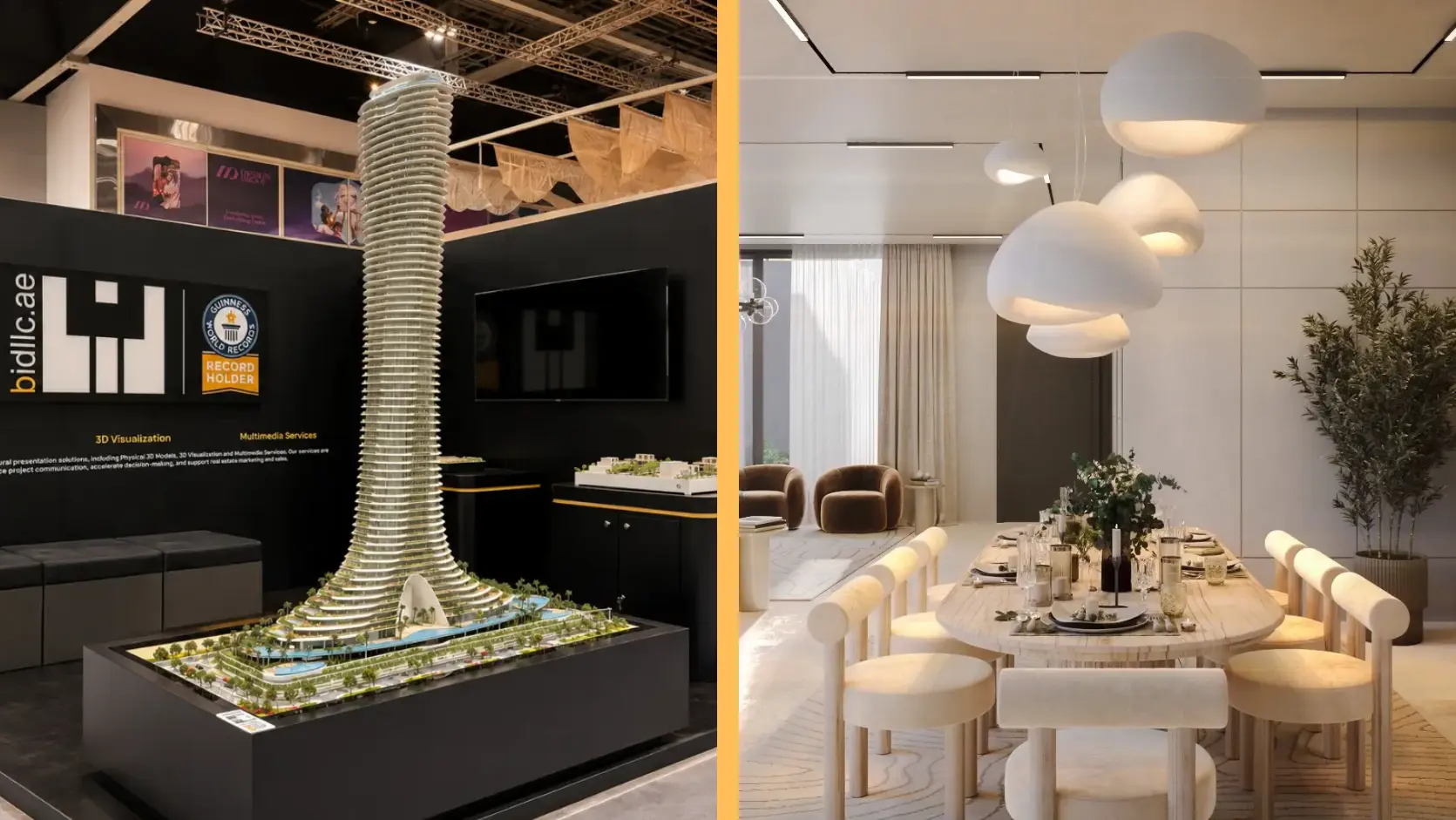
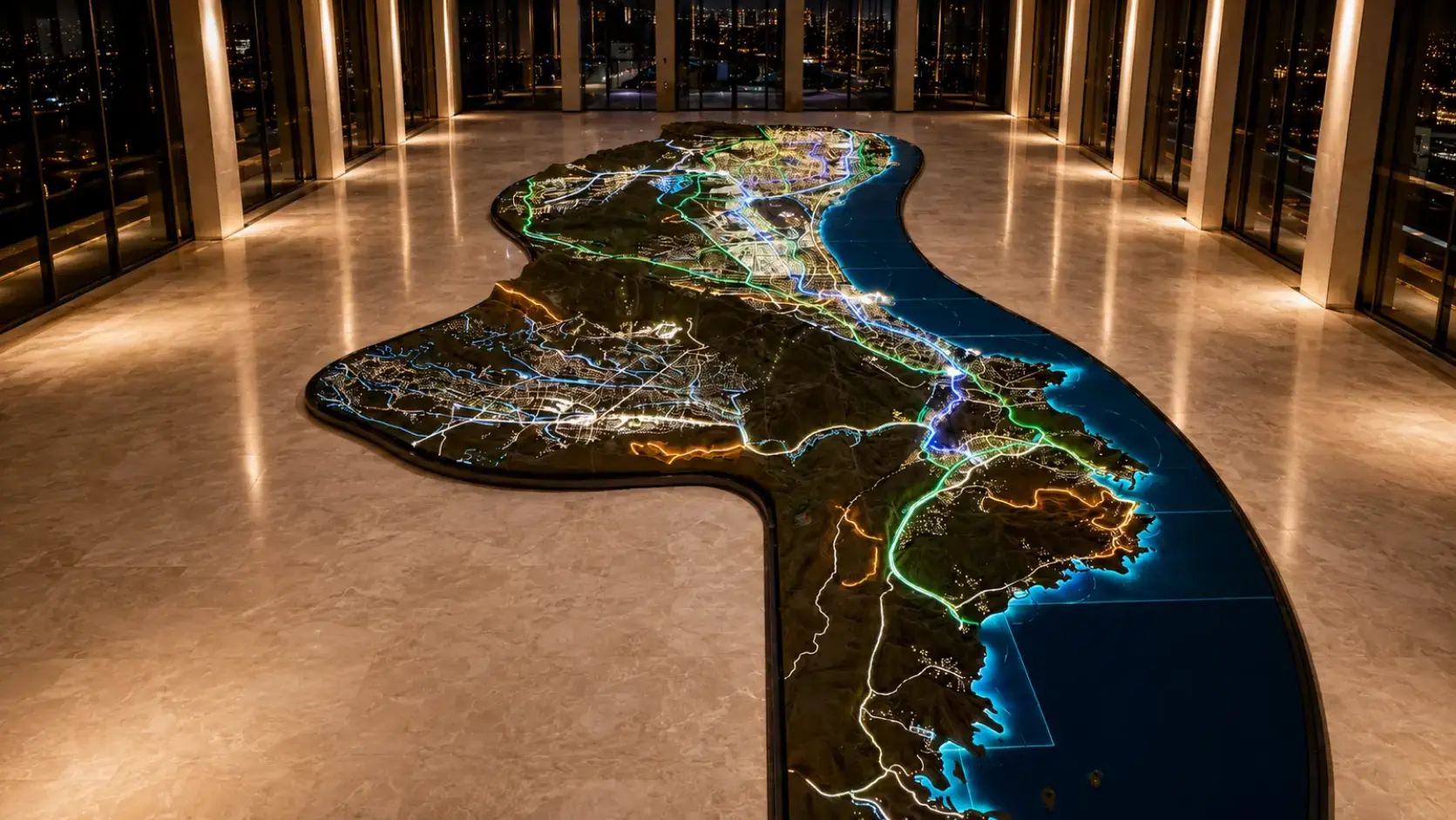
Use a physical scale model when you need to show the full development, masterplan, towers, roads, amenities, surrounding context, and overall project scale.
Use CGI renders when you need premium visuals for brochures, websites, ads, hoardings, social media, investor decks, and launch campaigns.
Use 3D animation when you need to tell the story of the project through movement, camera flow, lifestyle, arrival experience, amenities, and architectural reveal.
Use VR or AR when you want buyers, investors, or stakeholders to experience spaces more immersively, especially interiors, villas, apartments, views, and amenities.
Use a sales app when your sales team needs to present unit information, availability, layouts, floor plans, views, amenities, and project data interactively.
The real decision should come from one question:
What does the buyer need to understand before they can trust the project?
Physical Model vs CGI vs VR: Comparison Table
| Tool | Best For | Limitation |
|---|---|---|
| Physical Scale Model | Sales centers, investor rooms, exhibitions, masterplans | Needs space, production time, and proper installation |
| CGI Renders | Websites, brochures, ads, launch campaigns | Shows selected views, not always the full project logic |
| 3D Animation | Project storytelling, walkthroughs, launch films | Needs strong creative direction and a clear narrative |
| VR / AR | Immersive buyer experience and spatial exploration | Works best when guided by the sales team |
| Sales App | Unit selection, availability, views, layouts, sales presentations | Needs accurate data and clean UX planning |
When a Physical Scale Model Is the Right Choice
A physical architectural scale model is the right choice when the project needs to be understood as a complete development.
This is especially important for:
Masterplans
Mixed-use developments
- High-rise projects
- Luxury residential communities
- Waterfront developments
- Government projects
- Sales center models
- Investor presentations
- Real estate exhibitions
A physical model gives people something they can walk around, point at, discuss, and understand immediately. It shows the relationship between buildings, roads, landscape, amenities, plots, podiums, towers, and surrounding context.
This is where physical models still beat purely digital visuals.
A render can show a beautiful angle. A physical model can show the entire project.
For a sales center, the model often becomes the main presentation anchor. Sales teams can use it to explain location, access, views, amenities, and the development story. Buyers can instantly see how the project fits together.
That level of physical clarity is difficult to replace.
When CGI Renders Are Enough
CGI renders are powerful when the project needs high-quality still visuals for marketing and communication.
They are useful for:
- Websites
- Brochures
- Billboards
- Digital ads
- Social media campaigns
- Investor decks
- Email campaigns
- Press releases
- Interior and exterior previews
CGI renders help developers show the look, feel, mood, lighting, architecture, landscape, and lifestyle of a project before it is built.
For early marketing, CGI is often the first visual layer. It creates desire.
However, CGI has a limitation. It usually shows selected angles. It does not always explain the full scale, circulation, site relationship, or masterplan logic of a large development.
That is why CGI works best when paired with a physical model or interactive presentation system.
A render attracts attention. A model explains the project.

When 3D Animation Creates More Impact
3D animation becomes valuable when still images are not enough.
A strong 3D animation can show:
- Arrival experience
- Entrance sequence
- Building reveal
- Masterplan overview
- Road movement
- Landscape journey
- Amenity experience
- Interior walkthrough
- Tower flythrough
- Day and night atmosphere
For real estate developers, 3D animation is especially useful during project launches, digital campaigns, social media rollouts, investor presentations, and exhibitions.
It turns a project into a story.
But animation only works when it has direction. Weak animation becomes moving renders with no purpose. That does not create authority or confidence.
A strong animation should have controlled pacing, realistic lighting, premium camera movement, and a clear reason behind every shot.
When VR, AR, or a Sales App Makes Sense
VR and AR are useful when developers want buyers or stakeholders to experience the project more personally.
VR can help users explore apartments, villas, interiors, lobbies, amenities, views, and selected project spaces. AR can support interactive experiences over printed material, screens, physical models, or showroom environments.
But VR should not be used just because it sounds futuristic.
That is how developers waste money.
VR is useful when it helps the buyer understand space, finish, view, atmosphere, or layout better than flat visuals. It is weak when it becomes a gimmick without sales purpose.
A sales app is different. It becomes important when the sales team needs structured project information in one place.
- A good sales app can support:
- Unit selection
- Floor plans
- Availability status
- Project information
- Amenity explanation
- View simulation
- Tower and floor navigation
- Client presentations
- Investor discussions
For large developments, a sales app works best when connected with the physical model, CGI visuals, animations, and project narrative.
The app should not replace the salesperson. It should make the salesperson sharper.
Best Combination for Sales Centers
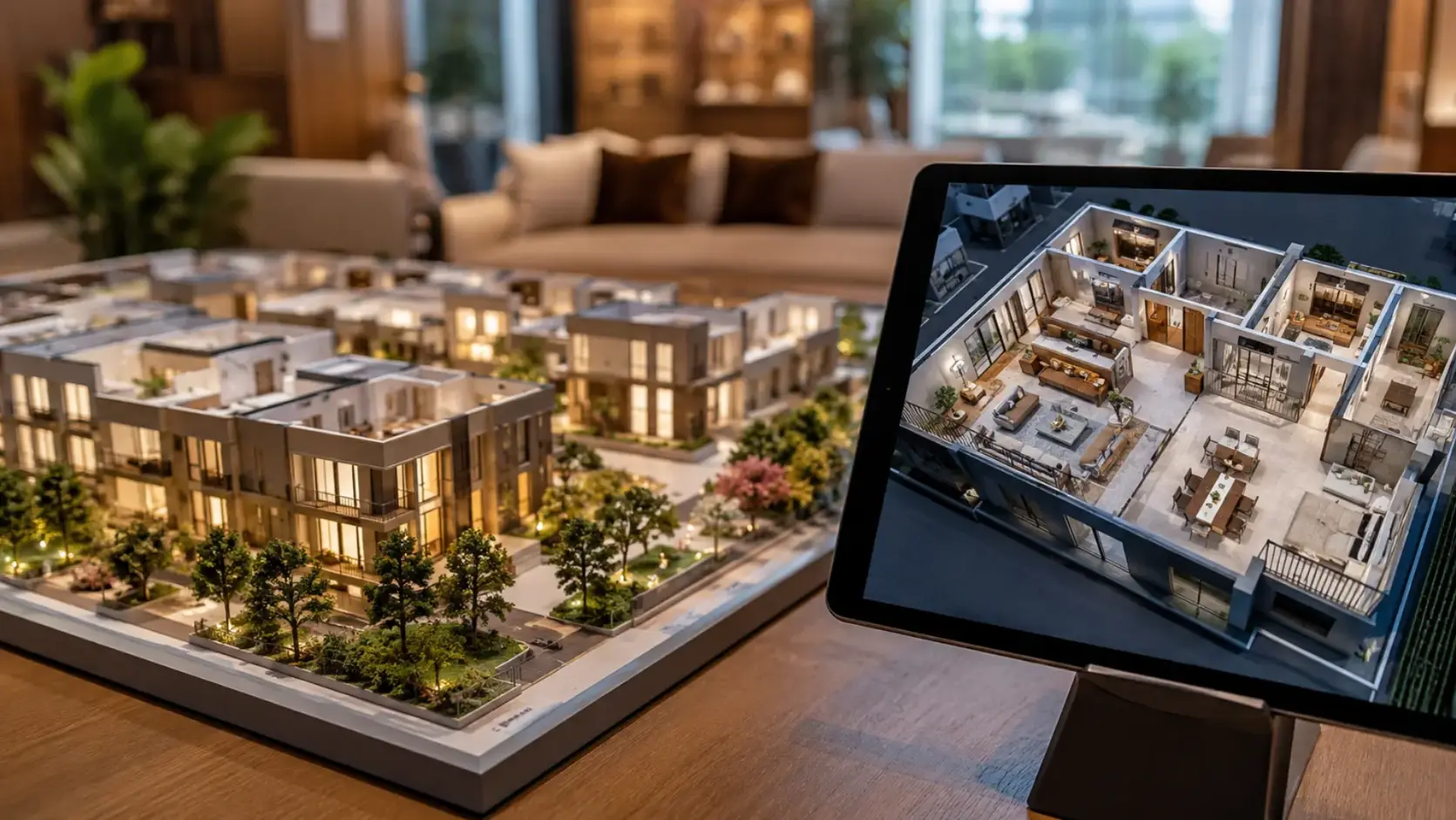
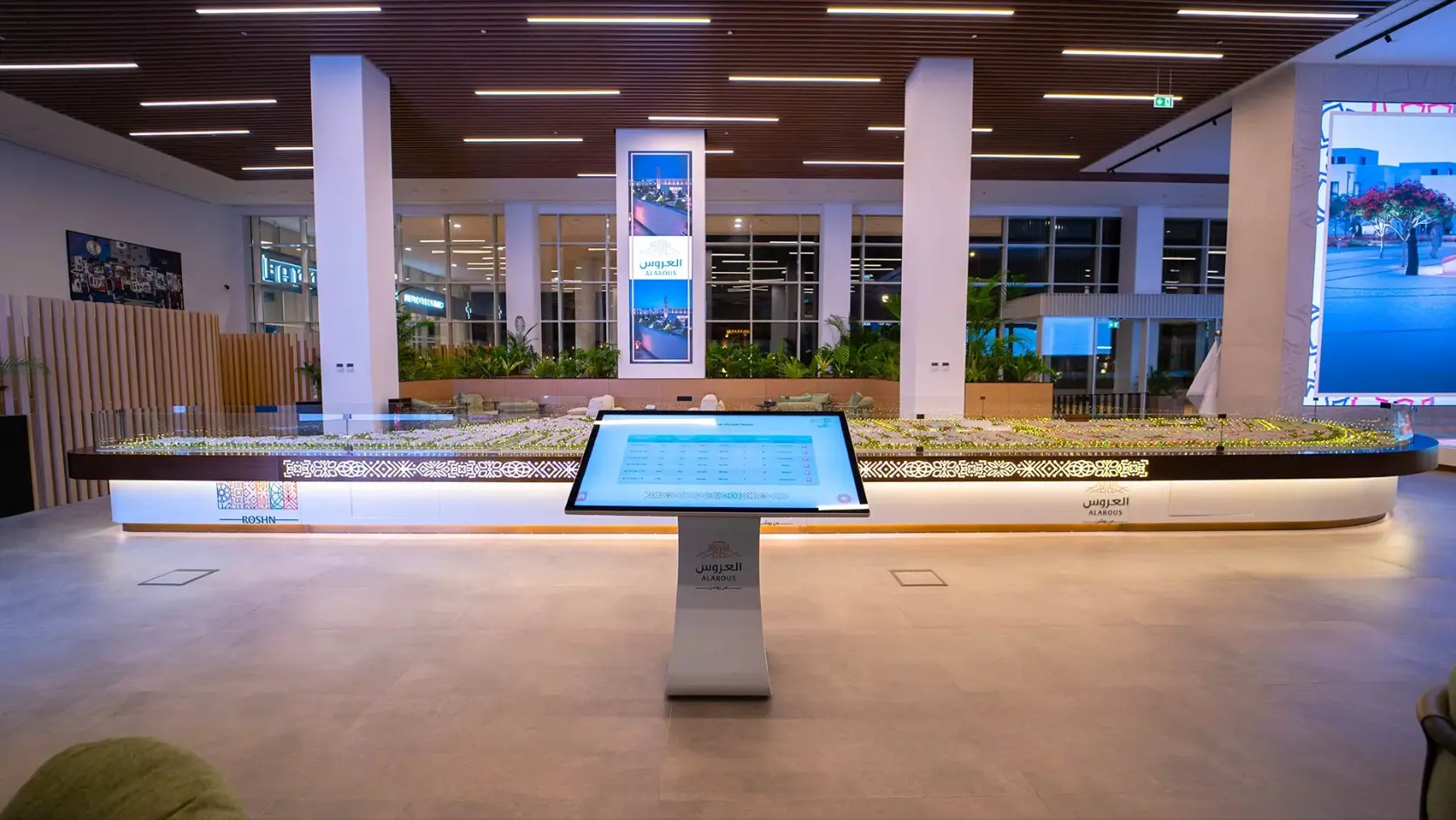
For a serious real estate sales center, the strongest setup is usually:
- Physical masterplan model
- CGI renders
- 3D animation
- Interactive sales app
- Touchscreen presentation
- VR or 360 experience, where relevant
The physical model becomes the center of the room. CGI creates emotional appeal. Animation tells the project story. The sales app supports unit-level discussion. VR or 360 content helps buyers experience selected spaces more deeply.
This creates a complete buyer journey.
- First, the buyer understands the project through the model.
- Then they feel the project through CGI and animation.
- Then they review details through the sales app.
- Then they explore selected spaces through VR or 360 visuals.
That is how presentation tools should work together.
A weak sales center has disconnected assets. A strong sales center has a connected presentation system.
Best Combination for Exhibitions
At exhibitions, the goal is different. Developers need to attract attention fast, explain the project clearly, and handle high visitor traffic.
The best exhibition setup usually includes:
A high-impact physical model
Large-format CGI visuals
Short cinematic animation
Interactive touchscreen
Simple lead capture system
Compact VR experience, if space allows
The model should create immediate impact from a distance. The animation should be short and strong. The CGI should make the booth look premium. The interactive screen should help the team explain the project quickly.
Do not overload the exhibition experience.
Visitors do not have patience for a complicated presentation. The content must be clear, fast, and visually memorable.
Common Mistakes Developers Should Avoid
Many developers spend heavily on visuals but still end up with a weak presentation.
The common mistakes are:
Choosing tools based on trend instead of purpose
Creating CGI that does not match the physical model
Using VR without a guided sales flow
Building a model without considering the sales center layout
Creating animation without a clear story
Using a sales app with poor data or confusing navigation
The biggest mistake is thinking better visuals alone will sell the project.
They will not.
Better visuals help only when they support a clear presentation strategy.
BIDllc’s Recommendation for Developers
At BIDllc, we recommend choosing real estate presentation tools based on four questions:
1. What stage is the project in?
An early concept may need CGI and animation first. A launch-ready project may need a physical model, sales app, and full sales center presentation system.
2. Who is the audience?
Buyers, investors, government stakeholders, consultants, and exhibition visitors do not need the same presentation experience.
3. What decision should the tool support?
Some tools explain scale. Some create emotion. Some support unit selection. Some explain phasing, location, amenities, or lifestyle.
4. Where will the presentation happen?
A boardroom, sales gallery, exhibition booth, and public project display all require different formats.
The right solution is rarely one asset. For serious developments, the strongest result often comes from combining architectural scale models, CGI renders, 3D animation, VR, AR, sales apps, and multimedia presentation into one connected experience.
Final Recommendation
Use a physical scale model when you need to explain the full project clearly.
Use CGI renders when you need strong visual marketing assets.
Use 3D animation when you need to tell the project story.
Use VR or AR when you need immersive exploration.
Use a sales app when your sales team needs structured project and unit information.
For sales centers, exhibitions, investor presentations, and project launches, do not choose blindly. Build the right combination around the audience, location, project stage, and decision you want the viewer to make.
A serious development deserves more than attractive visuals. It needs a complete presentation strategy.
FAQs About Physical Models, CGI, VR, and Real Estate Presentation Tools
Is a physical scale model still useful for real estate developers?
Yes. A physical scale model is still one of the strongest tools for explaining project scale, masterplan layout, building relationships, roads, amenities, and surrounding context. It is especially useful for sales centers, investor rooms, exhibitions, and large development presentations.
What is better, a physical model or CGI renders?
Neither is better in every situation. A physical model is stronger for explaining overall scale and layout. CGI renders are stronger for marketing visuals, emotional appeal, websites, brochures, ads, and launch campaigns.
Do CGI renders replace architectural models?
No. CGI renders can show selected views beautifully, but they do not fully replace the clarity of a physical architectural model, especially for masterplans, sales centers, exhibitions, and large developments.
When should developers use VR?
Developers should use VR when buyers or stakeholders need to experience spaces more immersively, such as apartments, villas, amenities, interiors, views, or selected areas of a development. VR works best when it supports a guided sales process.
What is the best setup for a real estate sales center?
A strong sales center usually combines a physical scale model, CGI renders, 3D animation, interactive screens, and a sales app. VR or 360 experiences can also be added if they improve the buyer journey.
Discuss Your Real Estate Presentation Strategy with BIDllc
BIDllc helps real estate developers, architects, government entities, and project stakeholders present future developments before they are built.
Our services include architectural scale models, CGI renders, 3D animation, VR, AR, sales and leasing apps, multimedia presentations, sales center models, and exhibition presentation solutions.
If you are planning a new launch, sales center, investor presentation, or exhibition showcase, BIDllc can help you choose the right mix of physical and digital tools.
Contact BIDllc to build a real estate presentation system that helps buyers and stakeholders understand your project faster, clearly, and with more confidence.

Leave a Reply